
Create a precise 3D asset that requires high-end abilities, expensive software and hours of manual effort. Designers had to refine the texture and optimize models, as well as creating sculpted geometry. Artificial intelligence has revolutionized this process completely. Modern technology allows you to create 3D models using images quickly. This allows 3D design a breeze for business professionals, students and even beginners.
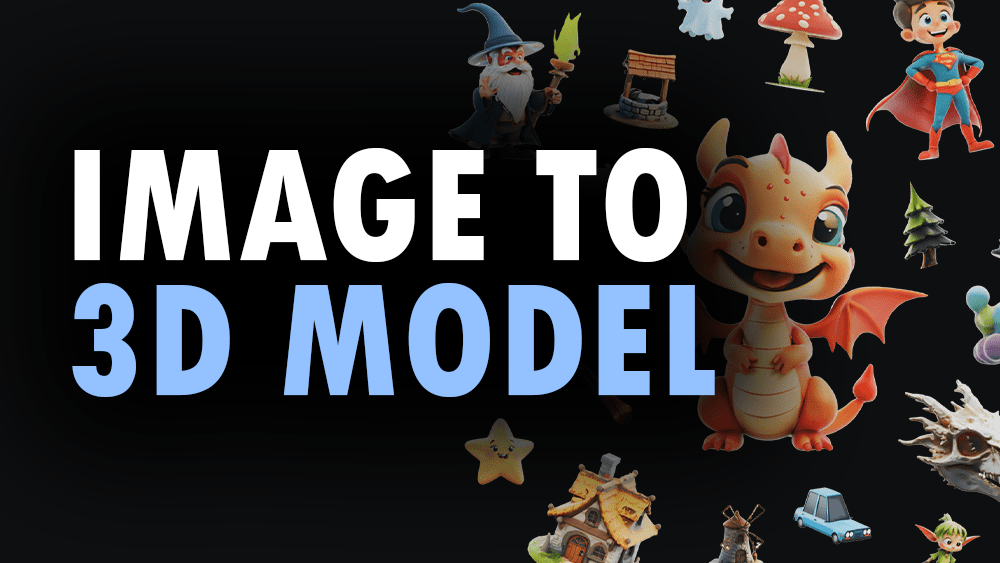
3D AI Studio shows how far technology has advanced and has tools that allow creators to go from an idea to a completed model in less than a quarter of traditional time.
The increasing demand for speedier 3D Creation
The need for high-quality 3D content is growing across many sectors. Visual assets that are realistic and attractive to audiences are crucial in a range of industries including gaming, design, architecture filmmaking, and online commerce. To meet the increasing demand, teams are searching for faster methods of producing models without sacrificing quality.
This is where image to 3D model free tools and AI-powered workflows play an important role. Instead of using complicated modeling software, creators upload an image and let AI look at the edges, shapes texture, shapes, and other aspects. The system then reconstructs the information from the image into a useful 3D structure.
The ability to work this method significantly cuts down the amount of time needed to make assets and allows teams to experiment more freely.
Photo-to-3D Technology: What is it?
When a photo to 3D model process begins Artificial Intelligence examines the image with great detail. It detects patterns, calculates depth, and reconstructs the object’s three-dimensional model. Advanced algorithms, trained on massive datasets, make sure that the models generated have real surface and proportions.
This technology is particularly useful for rapid prototyping. Designers can capture a photograph of a sketch or a physical item and turn it into a model to enhance. Developers can quickly create placeholder assets, allowing users to try out layouts or environments before they begin extremely detailed modeling.
Platforms like 3D AI Studio often include functions that automate other steps such as texturing and mesh optimization, making the final result suitable for use in real-world situations.
Benefits to Business and Creators
Accessibility is one of the main benefits of using 3-D model technology for pictures. Traditional modeling often needs years of experience, however AI-powered tools eliminate technical barriers and allow greater participation of people in 3D design.
Efficiency is a different benefit. Automated retopology generation and texture generation reduce repetitive tasks and allow creators to concentrate on their creativity and design instead of technical procedures. The advantages are also felt by companies with faster production times that translate into quicker project deliveries and lower cost.
Marketers can create visual content faster, educators can create interactive content and designers can show prototyping earlier in the process.
Flexible Workflows and Organised Workflows Options
Modern AI platforms are capable of more than simply generating models. They also assist in directing the models. Asset libraries help users organize and store projects in a way that is organized. This makes it easier to manage files and search for them easily.
Compatibility is also essential. Exporting a 3D model from an image in widely-used formats allows for seamless integration with 3D printing game engines and rendering software. This flexibility allows generated objects can be used in a wide range of professional workflows.
Look Ahead: AI-driven 3D Design in the future
The capabilities of 3D creation are only going to increase as artificial intelligence improves. Future software should be able to create complex models and environments, as well as automate further steps in the production process.
As platforms like 3D AI Studio continue to evolve, creators will have even greater control, speed, and flexibility when building digital assets.
Conclusion
Design is changing with the capability to transform photos into realistic digital items. Converting an image or photo to a 3D object has become simple quick, efficient, and speedy using tools that can support image-to-3D model workflows.
As technology develops, generating the 3D model of an image will be an integral part of contemporary design, assisting creators bring ideas to life faster and with less restrictions than ever before.